

The enduring impact of the Houston Family Trust
At the heart of a legacy gift is the belief that philanthropy can meaningfully shape a better life for future generations.
By Sarah TrefiakAt the heart of a legacy gift is the belief that philanthropy can meaningfully shape a better life for future generations. That belief, entrenched in the gift made by Mary (BA’47, BEd’50) and Stuart (DLITT'87) Houston, is transforming the future of disability policy in Saskatchewan by supporting research that will drive systemic change.
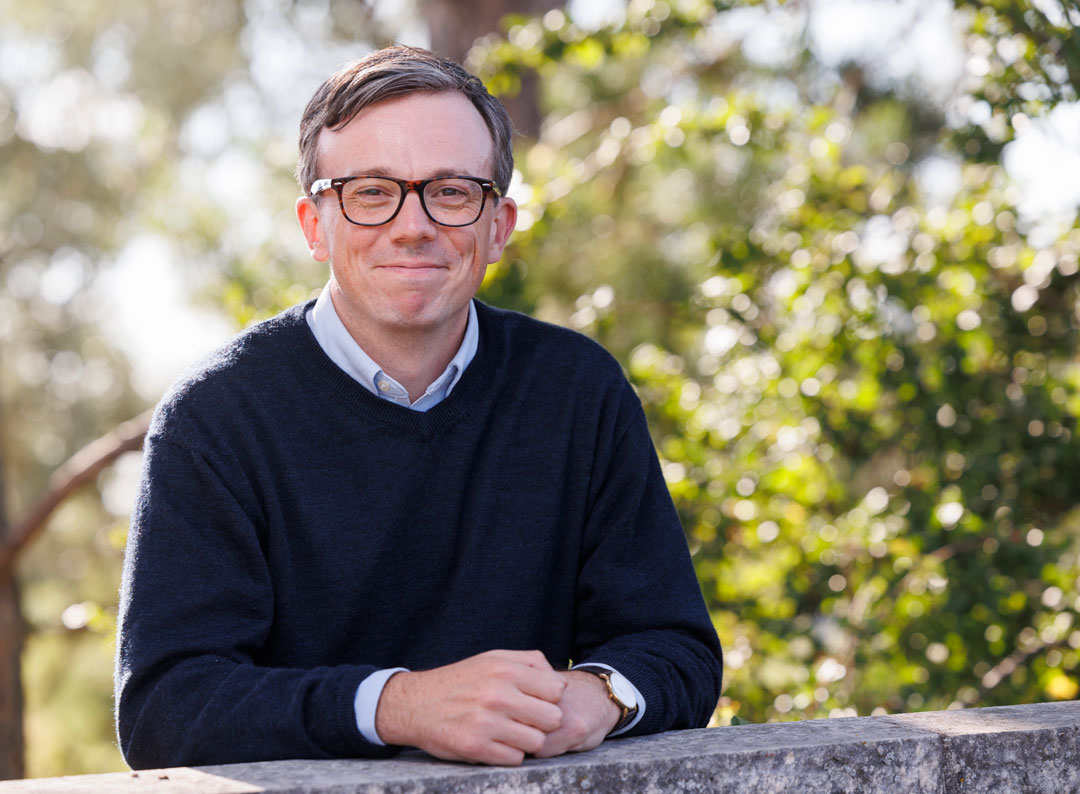
At the helm of such research is Dr. Daniel Dickson (PhD), a tenure-track assistant professor at the Johnson Shoyama Graduate School of Public Policy whose position is funded by the Houston Family Trust for Evidence-Based Public Policy—a trust created through Mary and Stuart’s legacy gift. Dickson’s work is deeply woven through connections with community and advocacy groups across Saskatchewan and focuses on disability policy design and implementation.
Inspired by his time as a support worker for people labelled with intellectual disabilities, Dickson’s research now contributes to a body of knowledge that aims to increase society’s understanding of social phenomena like ableism and austerity.
“Many of the same solutions to disability poverty and housing precarity that are being discussed in 2026 were also being discussed in 1980,” explained Dickson. “The solutions have not changed much, but the political and administrative contexts have changed dramatically.”
This is why his work is so essential. “By studying and explaining the repeated failure of these solutions to permeate these dynamic contexts,” he said, “social policy scholars across Canada are building a body of knowledge to create a more inclusive and equitable future.”
Since beginning his tenure-track position in 2024, Dickson has moved quickly to build relationships with disability advocacy groups across Saskatchewan. His early projects include interviewing organizations, service providers, and self-advocates as part of his research on the barriers to deinstitutionalization in intellectual disability housing services and supports. He has already shared preliminary findings at national and international conferences.
He has also collaborated on a project that investigates the potential of involving people labelled with intellectual disabilities directly in policy design work. Together with a research team of self-advocates from Inclusion Saskatchewan’s ICAN group, Dickson is helping model effective practices of disability policy co-design. In addition, he leads a team of research assistants conducting a scoping review of policy co-design literature.
In a time when policy solutions in this area are often overshadowed by short-term priorities, donors who invest in academic work help ensure that deep and independent research continues to take place. That is precisely what Mary and Stuart Houston envisioned when they established their endowed trust.
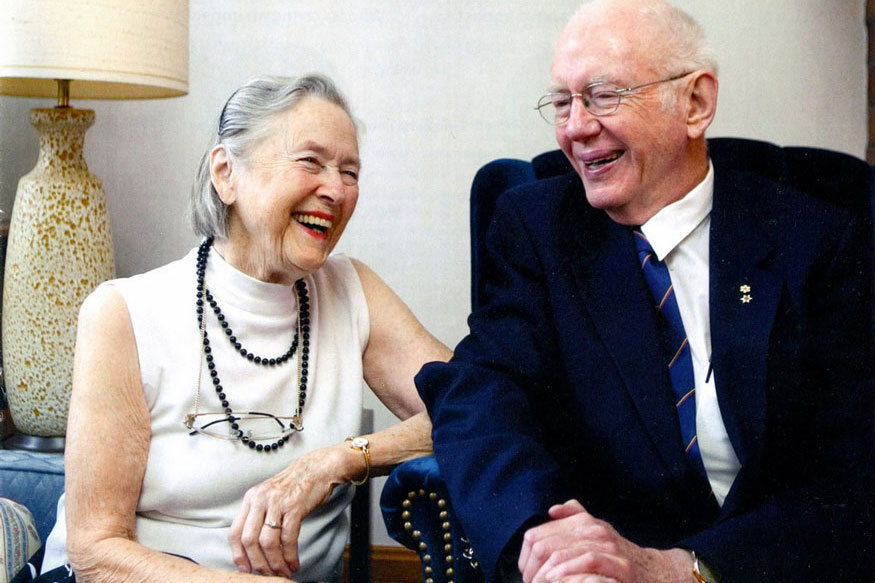
The Houston Family Trust reflects Mary and Stuart’s lifelong commitment to social justice, education and equity. Mary, a teacher and lifelong learner, and Stuart, a professor emeritus of medical imaging and a respected diagnostic radiologist, believed in the power of universities to generate knowledge for the public good. Over the course of their lives, they contributed more than $6.5 million to support both biology—through the Stuart and Mary Houston Professorship in Ornithology—and evidence-based public policy. Their $5.2 million legacy gift ensured that work would continue in perpetuity.
“I am not sure I would have a job at the University of Saskatchewan without the support of the Houston Family Trust,” said Dickson, who is driven by the possibility that his research can contribute to positive social change.
“When I started this work, there were very few Canadian scholars in public administration, policy studies or political science working on disability policy,” he said. “These days, I see far more students—including many with disabilities—choosing to pursue graduate studies in these disciplines.”
And just like Mary and Stuart did, Dickson is building his own legacy of sorts. When he prepares his research for dissemination, he is energized by the idea of producing valuable resources for the next generation of disability policy scholars.
“I hope my research eventually contributes to disrupting the ableism embedded within social institutions like universities and the civil service by demonstrating the benefits of empowering people with disabilities to design and implement policies that directly affect their lives.”
Dickson strongly believes that universities need donors more than ever.
“By donating to universities, you are not supporting the research of individuals in isolation. Rather, you are contributing to the far more important enterprise of academic research,” he said, adding that there is no alternative venue for the type of knowledge production an institution like the University of Saskatchewan can provide.
“In an era of mis- and dis-information and ‘artificial intelligence’, universities are a vital safeguard to the protection of free thought.”