

Shining a light on the legacy of Leon Katz
All legacy gifts leave a lasting impact, but each one is unique in the life, values or hope it represents.
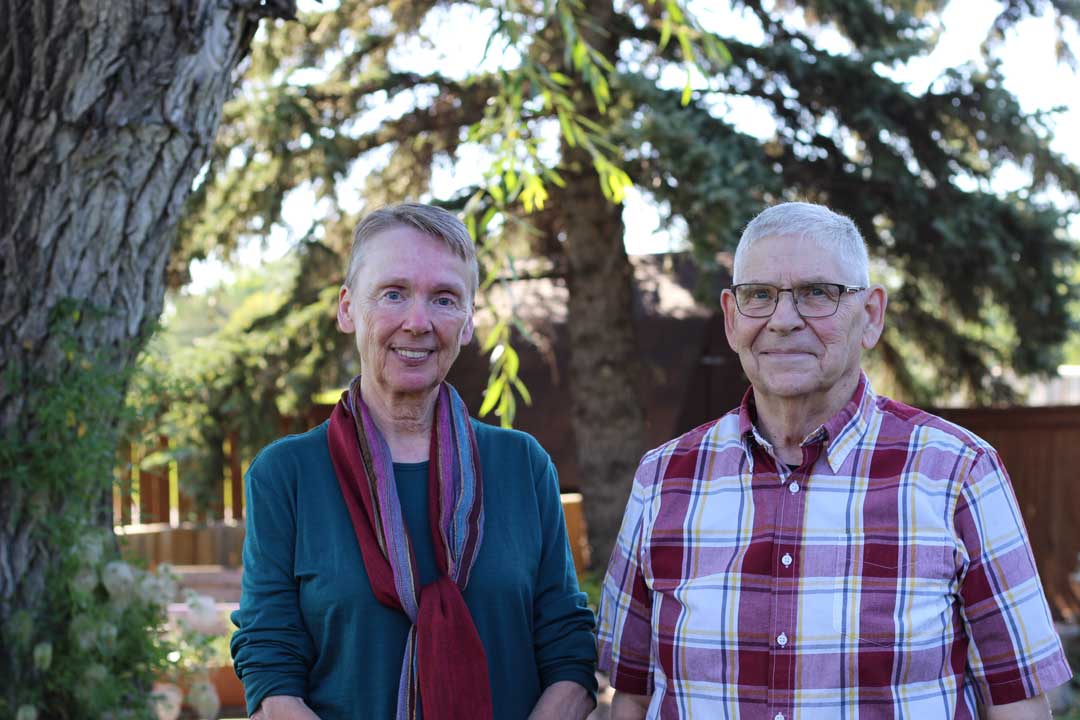
By Sarah TrefiakFor Dr. Sylvan Katz (BSc’69, MSc’71, DPhil) and Jennifer Osachoff, their recent decision to make a planned gift to the University of Saskatchewan (USask) is rooted in a strong belief in science and the desire to pay tribute to a remarkable man, Sylvan’s late father, Dr. Leon Katz – a pioneer in nuclear physics whose visionary work put Saskatoon and USask at the forefront of research in that area.
A lifelong relationship with USask
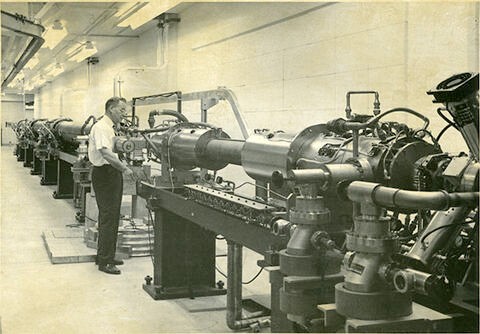
Sylvan can’t remember a time that USask wasn’t a part of his life. “I remember when I was six years old and my dad took me to the betatron on campus,” he said. “I sat there while he did his research and I watched the lights flash and listened to the scintillation counter ticking. It was great.”
Those early days of Sylvan’s life were just the beginning of a life immersed in science, technology and discovery. He went on to earn degrees in biophysics, molecular biology and science technology and innovation policy. Over his career he held various academic and professional positions and made significant contributions to advancing bibliometrics, competitive intelligence and innovation systems. He also opened and operated the first microcomputer store in Saskatoon.
Jennifer, a registered nurse turned clinical researcher, shared a similar passion for technology. She recalled working on one of the first personal computers brought into Royal University Hospital, making her an early adopter of the technology in Saskatoon. Now retired, Sylvan and Jennifer enjoy a wide range of hobbies. Jennifer has been very active with the Saskatoon Horticultural Society as well as the Prairie Water Gardening Society where she promoted sustainable gardening practices through community engagement and education. Sylvan has been an amateur radio operator since he was 18 and connects with people across the world. He also manages an online Facebook group for people with IBS, volunteering his time and expertise to help more than 112,000 users in the group.
Honouring a father’s remarkable accomplishments
Sylvan and Jennifer’s gift will establish the Dr. Leon Katz Distinguished PhD Scholar Award as well as a visiting scholar program named the Dr. Leon Katz Visiting Scholar in Nuclear and Accelerator Physics at USask’s College of Arts and Science.
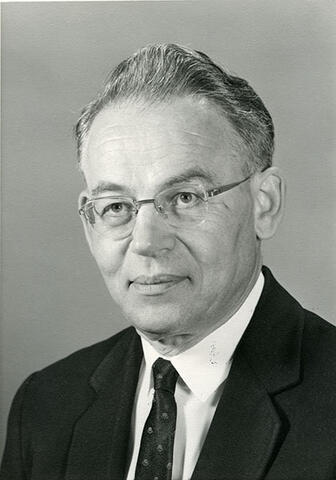
Born in Ukraine and raised in Canada from an early age, Leon Katz attended Toronto Central Technical School and as one of the top five graduates, was recommended to attend Queen’s University. He graduated with a degree in engineering physics from that institution in 1934, followed by a master’s degree in 1938 and a PhD from the California Institute of Technology in 1942 where he had the opportunity to work with Dr. C.D. Anderson, winner of a Nobel Prize in Physics and the discoverer of positive electrons. Katz joined USask in 1946 as an associate professor and was promoted to professor in 1952.
Early in his days at USask, Katz, along with Dr. Harold Johns and Dr. Newman Haslam, acquired a 25 MeV Betatron for Saskatchewan. For over a decade, the machine was used to treat patients from the cancer clinic and for high-quality research in nuclear physics.
Another highlight of Katz’s career came in 1964 when he was instrumental in bringing Canada’s first linear accelerator (LINAC) to Saskatoon. This first-class facility for particle research in physics brought international recognition and drove decades of nuclear physics research at the University of Saskatchewan. The facility, combined with Katz’s passion for elevating research at USask were instrumental in establishing the Canadian Light Source (CLS) synchrotron.
His achievements earned him national recognition. In 1952, he was made a Fellow of the Royal Society of Canada. In 1973, he was elected President of the Canadian Association of Physicists and in 1974, was awarded the Order of Canada. He received an honorary Doctor of Science from USask in 1990.
As for personal accomplishments, Leon and his wife, Georgina, had four children, all of whom attended USask. Zender (BA’73, MA’77), now retired and living in B.C., worked as a psychologist with the federal penitentiary system after completing his PhD at Simon Fraser in 1999. David (BSc’73, MSc’80), a computer scientist, ran the computer store with Sylvan and was instrumental in helping the CLS secure funding. Their daughter, Malka Faye (BA’77, MD’83), practiced family medicine and later psychiatry in Manitoba. Sylvan received two degrees from USask along with a Doctorate in Science Technology Policy from the University of Sussex in 1993. He followed closely in Leon’s footsteps, eventually returning to USask as an adjunct professor.
“One of the highlights of my life was doing research with my father. We published five research papers together. He was a pivotal factor throughout my entire life.”
Sylvan’s admiration for his father runs deep. “Just looking at his life path beginning as a young boy from Ukraine who didn’t speak English—it's just amazing,” said Sylvan. “And a bunch of serendipitous events took him on this course. You could never have planned his career trajectory and for me, it's astounding to see someone accomplish what he did.”
Reflecting on the past with a shared vision for the future
Sylvan and Jennifer considered other meaningful places to leave their money, but about a year and a half ago, began thinking about how a gift to USask could align well with their own beliefs and interests, while at the same time, honouring their history.
“We don't have any kids, and so we wanted to do something for the world, the community—something to make an impact,” said Jennifer. “We're both very keen on sciences and the future is always science. It's changing all the time. And if the world is going to survive, it's going to be the scientists who figure out how to do it.”
“And what better way to support science than do so in a way that honours my father—someone who played such a key role in USask’s physics department,” said Sylvan.
It was also important to Sylvan that instead of putting the decision of how their wealth is distributed in the hands of others, they could ensure their gift went to something they both value—science and future research.
“It makes you feel good to give your money to a place you want it to go, not a place where you have no control over its use,” he said.
A gift for the future
When asked what they hope their gift will accomplish, the couple was clear on the intent.
“I hope that this gift brings both top-notch PhD students and world-class scientists to our campus to deliver lectures and help people understand what the leading ideas in physics are and where the science is headed,” said Sylvan.
Jennifer added, “We’re hoping that the scholarships that come from our gift will enable people who might not otherwise have those opportunities to be able to learn and contribute in their own way, in their own right.”
“And hopefully, our gift will keep Leon Katz, Saskatchewan and USask on the world map or ‘in the light’ so to speak.”
Some descriptions in this article include details originally published by The StarPhoenix.